TLC Guest Blog: Beyond the Court
When most people hear the name Tennis & Life Camps, they imagine a summer program centered on a tennis, smiley-faced rackets lined along fences, the rhythmic sound of tennis balls hit back and forth, and campers chasing improvement under the sun. All of that is true. And yet, what stays with me most has never been the winning or the feeling of playing the point exactly as you imagined it. What endures is the feeling in the air. It’s a rare sense that people are allowed to arrive exactly as they are and discover that it is more than enough.
I have been in many rooms and with many organizations built with good intentions. Few feel like Tennis & Life Camps. There is something distinct about the environment that is created. It’s an atmosphere that invites vulnerability without demanding it, encourages confidence without arrogance, and makes positivity feel natural rather than forced. Campers quickly learn they are not competing for worthiness. They are participating in a community that assumes they already have it.
On the court, tennis teaches discipline, patience, and focus. Off the court, something quieter and more powerful unfolds. People begin to understand that their voice carries weight. They learn how to encourage one another, how to listen when someone else is speaking, and how to recover from mistakes without shame. These lessons are not delivered through lectures. They are practiced in real time in a shared laugh after a missed shot, in a fellow campers clap of encouragement, in the simple act of saying “good try” and meaning it.
Connection is the thread tying these moments together. It is easy to underestimate how transformative it is for a person to feel genuinely seen. Not evaluated. Not compared. Seen. When a camper hears their name spoken with warmth, when a peer offers support without sarcasm, when adults model calm and respect, a message is sent without a formal statement: You matter here. That message reaches deeper than any technical instruction.
One of the most revealing experiences each year comes during our retreat camp sessions. The first discussion is always uncertain. I watch campers look around, nervous to engage. I hear whispers traded between friends. I ask a question about a difficult but necessary topic like racism, sexism, mental health, identity and the room often meets me with silence. It is not defiance, but in hesitation, the kind that comes from wanting to say the right thing and fearing the wrong one. But the final session tells a different story. The last gathering is filled with voices. We recap our conversations and campers begin to articulate what they have learned. Chaperones and staff often raise their hands first, modeling openness, and then the campers follow with growing confidence. Some share commitments to make a positive impact in their schools and communities. Others ask thoughtful questions that build upon what was said before. The room that once held quiet uncertainty becomes a space of reflection and intention. It is in those moments that hope feels less like an abstract idea and more like a decision being made in real time.
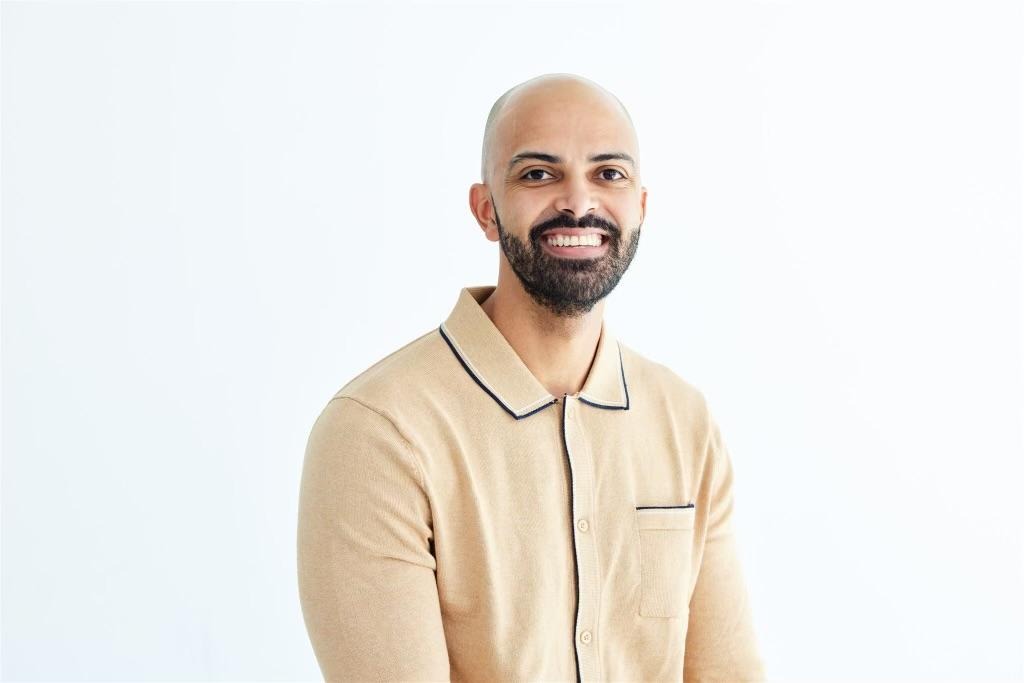
My own journey through Tennis and Life Camps mirrors that evolution. I arrived as a 20-year-old instructor who was shy and unsure, someone who lacked the confidence to give directions loudly enough for a group to hear. There were days when campers leaned in simply to catch my words. Over time, something shifted. The camp did not just shape the campers; it shaped me. Working at TLC became one of the most rewarding and impactful experiences of my life. I went from struggling to project my voice to helping young people find theirs and encouraging them to express opinions, perspectives, and questions they might otherwise have kept inside. Growth did not arrive all at once. It arrived through repetition, through encouragement, through the steady realization that leadership is often built in small increments rather than grand moments.
One memory that remains especially vivid came from a camper turned instructor who shared how meaningful it was to see a person of color in a leadership role teaching about inclusion and belonging. Their words surprised me. I had entered the space hoping simply to serve, not thinking of myself as a symbol or example. Yet their comment was a quiet reminder that presence alone can carry weight. Sometimes leadership is not about titles or speeches. It is about showing up consistently enough that someone else begins to imagine new possibilities for themselves. It deepened my understanding of how representation and encouragement matter, even when we do not immediately recognize their influence.
I found myself wanting to serve my community in wider and wider circles, to carry the lessons learned on those courts into the rooms and institutions I would later enter. I started at Tennis and Life Camps as an instructor, then continued my journey at Life Time as a Teaching Pro, later moved to USTA Northern working in customer service and diversity, equity, and inclusion, and today I work for the Minnesota Attorney General’s Office leading diversity, equity, and inclusion for the entire office. Each step was intentional. Each role became an opportunity to serve others on a broader scale. The through-line has always been the same: to leave spaces more understanding, more welcoming, and more humane than I found them.
Empathy grows naturally in environments like TLC. Campers come from different neighborhoods, different family stories, and varying levels of confidence. Instead of those differences creating distance, they become bridges. People learn to assume good intentions and to approach misunderstandings with curiosity rather than accusation. Positive assumption becomes a habit, the decision to believe the best in one another even when it would be easier not to. In a world quick to judge, this practice feels transformative.
The values often described as diversity, equity, and inclusion do not appear here as slogans. They show up in everyday interactions. Equity lives in the understanding that each camper may need something slightly different to thrive, it could be an extra word of encouragement, a bit more patience, or a moment of reassurance. Inclusion appears when no one is treated as an afterthought, when differences are welcomed as strengths that enrich the whole group. Diversity becomes visible in the simple reality that leadership and excellence take many forms and many voices.
Belonging becomes the victory of the experience. When a camper feels secure in their place, their posture shifts. They take more chances, recover more quickly from mistakes, and extend grace to others because they have felt it themselves. Participation turns into investment. Presence turns into purpose. These internal changes do not stay behind when camp ends. They travel with people into classrooms, friendships, and workplaces, shaping how they show up in the world.
In times when uncertainty and division can feel close to home, especially here in Minnesota, places like Tennis and Life Camps offer something steady. They provide a model of what is possible when people choose encouragement over criticism, connection over isolation, and understanding over assumption. Hope does not arrive here as a grand speech. It shows up in small, consistent acts, a supportive word, a shared smile, a calm conversation that makes space for everyone at the table.
The rally ends. The nets come down. The day closes. Yet the lessons remain. Beyond the court, beyond the painted lines, what stays with people is the knowledge that they were valued, that they were heard, and that they were capable of more than they may have imagined. In that knowledge lives an optimism, the belief that when we create spaces rooted in empathy and connection, we are not only shaping better athletes. We are shaping more understanding communities and a more hopeful future.